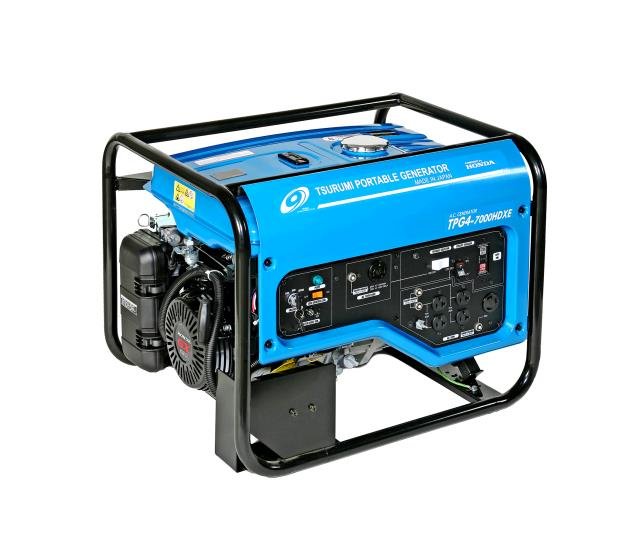
When the lights go out or your project needs power far from an outlet, a reliable generator isn't just a convenience—it's essential. For many homeowners, RV enthusiasts, and small business operators, finding the perfect balance of power and portability often leads to the sweet spot of Sizing & Applications for 7000 Watt Generators. This power range offers robust capability without the bulk or expense of industrial-grade units, making it a versatile workhorse for a broad spectrum of medium power needs.
This guide is your blueprint to understanding exactly what a 7000-watt generator can do, how to ensure it meets your specific demands, and the critical considerations for safe and effective use.
At a Glance: Your 7000-Watt Generator Essentials
- 7000 Watts is Your Medium-Duty Hero: Ideal for powering a good portion of a home during outages, keeping an RV comfortable, or running several tools on a job site.
- Calculation is King: Don't guess! Accurately sum running watts and factor in the highest starting (surge) wattage of your devices, then add a safety buffer.
- Running Watts vs. Starting Watts: Understand the difference between continuous power and the brief surge needed to kick-start motors—it's crucial for correct sizing.
- Versatile Applications: Think refrigerators, lights, sump pumps, a furnace blower, TVs, microwaves, window ACs, drills, and air compressors.
- Safety First, Always: Never "backfeed" electricity into your home's system without a licensed electrician and a proper transfer switch. Carbon monoxide is a silent killer.
Decoding 7000 Watts: The Sweet Spot for Balanced Power
Imagine a power outage hits, or you're deep in the wilderness with your RV, or perhaps tackling a remote construction project. A 7000-watt generator steps in as a formidable solution, offering substantial power without being excessively large or fuel-hungry. It's often the "just right" choice for those who need more than basic emergency lighting but less than a whole-house standby system.
A generator in this range is highly versatile. It can comfortably manage the essentials of a typical home, ensure your RV's creature comforts, or keep a small crew productive. But before you connect it, understanding the nuances of power demands is paramount.
The Science of Power: Running Watts vs. Starting Watts – Why It Matters
To correctly size any generator, including a 7000-watt model, you need a firm grasp of two key concepts: running watts and starting watts. Skipping this step is the fastest way to end up with an underpowered (or oversized) unit, leading to frustration, tripped breakers, or wasted fuel.
- Running Watts (Continuous Power): Think of this as the steady amount of power an appliance or tool needs to operate continuously once it's up and running. It's like the cruising speed of a car—the energy required to maintain momentum. For instance, a refrigerator might continuously draw 600 running watts to keep your food cold.
- Starting Watts (Surge Power): This is the brief, but significantly higher, burst of power required to get certain appliances, especially those with electric motors, compressors, or pumps, initially moving. Imagine the extra gas a car needs to accelerate from a standstill. This surge lasts for only a few seconds, but if your generator can't provide it, the appliance won't start. A common example is an air conditioner; while it might only need 1,500 running watts, it could demand an additional 2,000 watts to overcome its initial inertia.
Understanding this distinction is the bedrock of accurate generator sizing. Your 7000-watt generator needs to be able to handle the highest starting wattage of any single appliance you'll kick on, while still running everything else.
Cracking the Code: How to Accurately Size Your Generator
Don't leave generator sizing to chance. Follow these methodical steps to ensure your 7000-watt generator is the perfect fit for your power needs.
Step 1: Map Out Your Essentials – Calculate Total Running Watts
First, list every appliance and tool you anticipate powering simultaneously. Be realistic and prioritize your must-haves. For each item, find its running wattage. You can usually locate this on:
- The manufacturer's label or data plate on the appliance.
- The owner's manual.
- The manufacturer's website.
If an appliance only lists amperage (Amps), you can easily convert it to watts using a simple formula (assuming a standard 120V household current):Watts = Volts x Amps
Example: A coffee maker drawing 10 amps on a 120-volt circuit needs120V x 10A = 1200 Watts.
Once you have the running wattage for each item, sum them up. This gives you your Total Running Watts.
Step 2: The Starting Surge – Identify Your Biggest Power Hog
Now, review your list and identify the single appliance that has the highest additional starting wattage requirement beyond its running watts. This is crucial because your generator only needs to provide this peak surge for one appliance at a time. You won't be starting every motor-driven appliance simultaneously.
Example: Let's say your RV air conditioner runs at 1,500 watts but needs an extra 2,000 watts to start. This 2,000 watts is your "highest additional starting wattage."
Step 3: The Grand Total – Calculating Your Minimum Starting Wattage
Combine your total running watts with the highest additional starting watts you identified in the previous step. This figure represents the absolute minimum peak power your generator must be able to deliver.Total Starting Watts Needed = Total Running Watts + Highest Additional Starting Watts
Let's walk through an example:
Suppose your essential items add up to:
- Refrigerator: 600 running watts
- Lights: 300 running watts
- TV: 100 running watts
- Furnace Blower: 800 running watts (running)
- Sump Pump: 1000 running watts (running)
- Total Running Watts: 600 + 300 + 100 + 800 + 1000 = 2,800 running watts
Now, let's say your sump pump is the item with the highest additional starting surge: - Sump pump: 1,000 running watts, but needs an additional 2,000 watts to start.
Therefore, your Total Starting Watts Needed would be:2,800 (Total Running Watts) + 2,000 (Highest Additional Starting Watts for Sump Pump) = 4,800 Starting Watts Needed
In this scenario, a generator with a 7,000-watt peak (starting) capacity would comfortably handle this load, as its 7,000 watts far exceeds the 4,800 watts required.
Step 4: The Golden Rule – Adding Your Safety Buffer
Once you've calculated your total starting watts, always add a safety buffer of at least 20%. This margin accounts for unforeseen startup surges, potential future expansion (what if you add a new appliance later?), and simply provides a safety net to prevent overloading your generator. Some experts even suggest a "20/20/20 rule" for startup, expansion, and safety, effectively recommending a 60% buffer, though 20% is a solid minimum.
For our example: 4,800 Starting Watts Needed + 20% (960 watts) = 5,760 watts.
Again, a 7000-watt generator is still well within comfortable range.
What Can a 7000-Watt Generator Power? Real-World Applications
A 7000-watt generator falls squarely into the "medium" power category, offering a sweet spot of versatility for various uses. It's powerful enough to make a significant difference during outages or on the go, yet typically remains portable and manageable.
Home Backup: Keeping the Lights On (and More!)
When grid power fails, a 7000-watt generator can be a lifeline. It won't power every single appliance in a large home, but it can comfortably manage a broad range of essentials, moving you beyond just emergency lighting.
- Core Essentials: You can expect to power your refrigerator, several lights, your Wi-Fi router, and a furnace blower (for heat, especially critical in colder climates) without issue. It can also easily run a sump pump, critical for preventing basement flooding.
- Adding Comforts: Beyond the absolute necessities, a 7000-watt unit often has enough headroom for a microwave, a television, and even a window air conditioner (typically up to 10,000-12,000 BTUs) or a smaller central AC unit if equipped with a soft-start kit or if you carefully manage your load.
- The Medium Home Advantage: For homes in the 1,600-3,000 square foot range, a 7000-watt generator, when properly connected via a transfer switch, can cover essentials like the kitchen, laundry appliances (one at a time), and a single central AC unit (with careful staging or soft start). This allows for a much more comfortable experience during an extended outage compared to smaller generators.
Life on the Road: Powering Your RV Adventures
For many RVers, a 7000-watt generator is the ideal companion for boondocking or dry camping, providing the freedom to enjoy all the amenities of home, even off-grid.
- Cool Comfort: Perhaps the biggest draw for RV owners is the ability to run a 13,500 BTU RV air conditioner, a common size that smaller generators struggle with. This is a game-changer for summer road trips.
- Kitchen & Entertainment: You'll have no problem powering your microwave, toaster, coffee maker, TV, and charging all your devices, making extended trips more enjoyable.
On the Job Site: Reliable Power for Your Tools
Small construction sites, renovation projects, or even extensive DIY efforts benefit greatly from the sustained power a 7000-watt generator offers.
- Tool Powerhouse: It can simultaneously run several corded power tools like circular saws, drills, grinders, and even a smaller air compressor for framing or roofing jobs. This boosts productivity and eliminates the need for long, cumbersome extension cords from distant outlets.
- Lighting and Chargers: Beyond power tools, it's perfect for lighting up a workspace and keeping battery chargers for cordless tools topped off.
Beyond the Basics: Emergency Preparedness & Outdoor Events
A 7000-watt generator's versatility extends to various other scenarios:
- Food Trucks & Vendors: Essential for powering cooking equipment, refrigeration, and lighting at outdoor events.
- Outdoor Events: For concerts, festivals, or large family gatherings, it can run sound systems, lighting, and food preparation areas.
- Small Workshops: Provides ample power for woodworking tools, welders (smaller models), and other shop equipment.
Choosing Your Champion: Generator Types & Fuel Considerations
When selecting your 7000-watt generator, you'll encounter different types, each with unique advantages. Understanding these differences ensures you pick the best match for your primary applications.
Inverter vs. Traditional: Clean Power for Sensitive Tech
- Inverter Generators: These sophisticated units are renowned for producing pure sine wave power, making them perfectly safe for sensitive electronics like laptops, smartphones, and smart TVs. They are also significantly quieter, more fuel-efficient due to their ability to adjust engine speed based on load, and often more portable. If your primary goal involves powering modern electronics or enjoying quiet operation, an inverter generator in the 7000-watt range is an excellent choice.
- Traditional Open Frame Generators: Generally more affordable and robust, these generators are often louder and produce "modified sine wave" power, which isn't ideal for delicate electronics. They excel at powering motors, power tools, and basic appliances where pure sine wave isn't a concern. For residential backup primarily involving standard appliances or for job site power, a traditional open-frame unit can be a cost-effective solution.
Portable Powerhouse or Standby Guardian?
While 7000 watts can be found in both portable and standby units, for this wattage, we're primarily discussing portable generators.
- Portable Generators: These are designed for mobility, with wheels and handles, allowing you to move them where power is needed—whether that's your backyard, an RV campsite, or a job site. A 7000-watt portable generator offers fantastic flexibility.
- Whole-House/Standby Generators: While larger standby generators are common, a 7000-watt standby unit is less typical for whole-house backup, as it falls on the lower end of standby power for most homes. Standby generators automatically kick on when the power goes out, offering seamless, continuous power. However, for true whole-house comfort (running central AC, electric water heaters, etc.), you'd typically look for units 10kW (10,000 watts) and above. For comprehensive guidance on a 7000-watt solution, you might find more in-depth comparisons in The ultimate 7000 watt generator guide.
Fueling Your Power: Gasoline, Propane, or Dual Fuel?
Generators typically run on various fuel types, each with its pros and cons:
- Gasoline: Widely available and potent, but has a shorter shelf life and can be less stable in long-term storage. Most portable 7000-watt generators are gasoline-powered.
- Propane (LPG): Burns cleaner, has an indefinite shelf life, and is often preferred for longer-term storage or use. However, it can be less fuel-efficient than gasoline and requires larger tanks.
- Dual Fuel: These versatile generators can run on both gasoline and propane, offering the best of both worlds and increased flexibility, which is a popular feature in the 7000-watt range.
- Natural Gas (NG) & Diesel: Less common for portable 7000-watt units due to infrastructure requirements (NG) or higher cost/weight (diesel).
Beyond the Purchase: Essential Safety & Installation Wisdom
A generator is a powerful tool, and with power comes responsibility. Improper use or installation can lead to severe hazards, including electrocution, fire, and carbon monoxide poisoning.
The Golden Rule: Never Backfeed!
This cannot be stressed enough: Never, ever plug a generator directly into a wall outlet in your home (a practice known as "backfeeding"). This bypasses crucial safety mechanisms, sending power back into the utility grid. It can electrocute utility workers attempting to restore power and can damage your home's electrical system, potentially causing fires.
- Transfer Switches are Non-Negotiable: If you plan to power circuits in your home (beyond just plugging extension cords directly into the generator), you must have a proper transfer switch installed.
- Manual Interlock Kit: A mechanical device installed in your electrical panel that prevents the main breaker and the generator breaker from being on simultaneously. You manually switch between utility and generator power.
- Automatic Transfer Switch (ATS): More common with standby generators but can be used with portables. It automatically senses a power outage, starts the generator, and switches your home's circuits to generator power.
- Call a Licensed Electrician: Always have a licensed and qualified electrician install your transfer switch and connect your generator to your home's electrical system. They ensure compliance with the National Electrical Code (NEC) standards (sections 700 and 701) and local regulations, guaranteeing safety and proper function.
Ventilation is Vital: Protect Against Carbon Monoxide
Generators produce carbon monoxide (CO), an odorless, colorless, and deadly gas.
- Operate Outdoors ONLY: Always operate your generator outdoors, far away from windows, doors, and vents that could allow exhaust fumes to enter enclosed spaces.
- Safe Distance: Maintain at least 20 feet of clearance from your home.
- CO Detectors: Install battery-operated carbon monoxide detectors in your home, especially near sleeping areas, and check them regularly.
Maintenance Matters: Longevity and Reliability
Just like your car, your generator needs regular maintenance to perform reliably when you need it most.
- Follow Manufacturer Guidelines: Refer to your owner's manual for recommended service intervals, including oil changes, spark plug replacements, and air filter cleaning.
- Fuel Storage: If using gasoline, use a fuel stabilizer to prevent gumming and ethanol-related issues. For long-term storage, it's often best to run the carburetor dry or drain the fuel.
- Test Runs: Start your generator periodically (e.g., once a month) and let it run for 15-20 minutes under a small load to ensure it's in working order and to circulate fluids.
Next Steps to Confident Power: Bringing It All Together
A 7000-watt generator is a powerful investment that can bring peace of mind and incredible utility. By understanding the distinction between running and starting watts, meticulously calculating your power needs, and prioritizing safety, you'll be well-equipped to make an informed decision.
Take the time to list your essential appliances, check their wattage, and factor in that crucial safety buffer. Once you have a clear picture of your requirements, you can confidently select a 7000-watt generator that's perfectly matched to your home backup, RV adventures, or job site demands. Remember, when it comes to electrical connections to your home, a licensed electrician is your best friend. With the right preparation, your 7000-watt generator will stand ready to deliver reliable power whenever and wherever you need it.